
Movie Talk – A Practical Approach to Short Films in the Classroom

Hey there! 🍎

I recently created a fantastic resource that I couldn’t wait to share with you. It’s called “Movie Talk – Short Film Resource,” and it’s a game-changer for our language lessons. Let me break it down for you, and I promise you’ll be just as excited as I am.

Vocabulary: Unlocking the Power of Words

First off, the “Vocabulary” section is a brilliant way to set the stage. It’s like a backstage pass to understanding the short film we’re about to watch. Students get to learn key vocabulary and phrases related to the video’s theme. This is perfect for ensuring they can talk about the video with confidence after watching it. Plus, there’s a space for students to jot down any additional words or phrases they come across during the lesson. It’s all about continuous learning, my friend!

Predictions: Unleash Your Crystal Ball

Predictions are where the magic begins. Before we even hit play on that short film, our students are making predictions about what they think it’s all about. They can do this individually or with a partner, which adds a fun twist to the activity. This not only gets their minds buzzing but also encourages critical thinking. And the best part? As the film unfolds, we can circle back to the vocabulary introduced, helping students understand new words in context.

Video Timeline and Comprehension Questions: Did You Get It?

After the cinematic adventure, we’re not left in the dark. The “Video Timeline and Comprehension Questions” sections are our guiding lights. We can quickly assess if our students understood the basics of what went down in the film. The comprehension questions prompt discussions and encourage students to express their opinions and insights. It’s all about ensuring that the film was more than just entertainment – it was a lesson.

What Comes Next and Summary: Get Creative and Summarize

The “What Comes Next” section is an absolute hoot! After seeing the film, students get to use their imaginations. They can think up alternative scenarios or developments for the characters and plot. It’s a fabulous way to not only practice language skills but also foster creative thinking and storytelling.

Lastly, we’ve got the “Summary” section. This is where we determine who aced the lesson. It helps us figure out which students truly grasped the concepts and can put the grammar and vocabulary into practice. It’s a great way to tie everything together.

So, my dear fellow teacher, if you want to make your language lessons more engaging and interactive, “Movie Talk – Short Film Resource” is the way to go. It brings the magic of short films into our classrooms and ensures that our students are not just passive viewers but active learners.

Here is a look at the first page! Don’t worry, there is a link below to get the whole resource FREE!!!
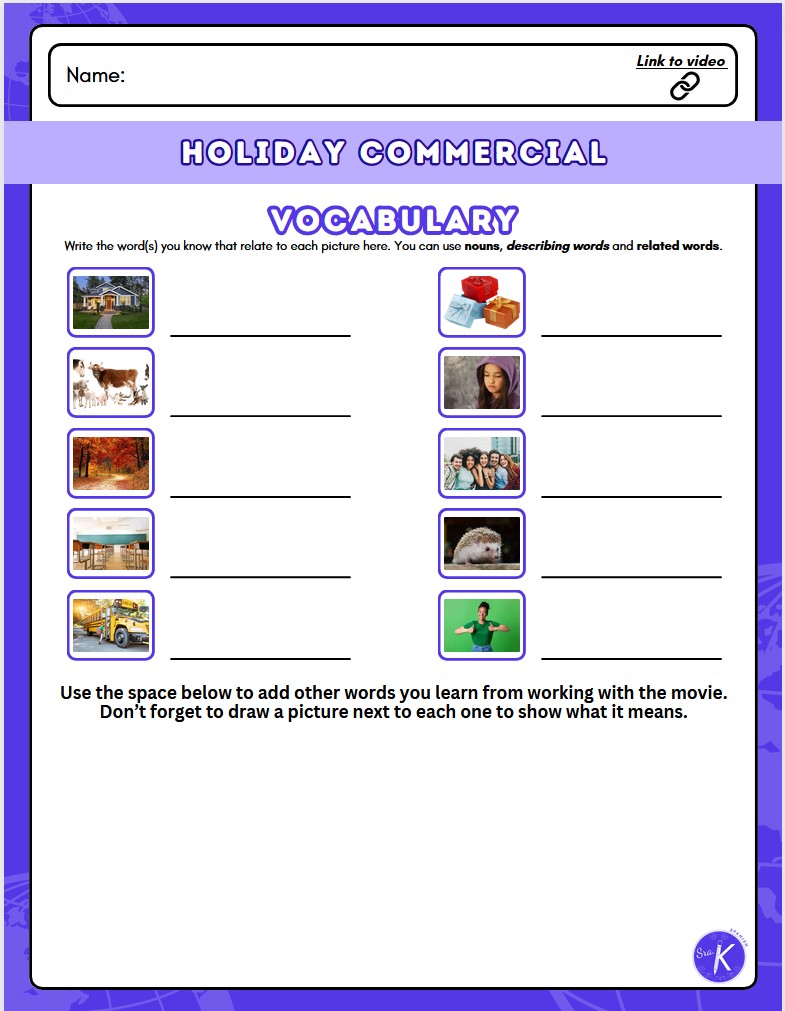
Since you KNOW I want you to have something you can use TODAY, head to my TpT Store and get THIS FREE resource. Of course, while you are there, I would love for you to follow my store and maybe check out some of the other resources. Here’s to exciting, educational Movie Talk days in the classroom! 🎬📚🤓

Do you have more ideas for engaging students during Movie Talks? Share your thoughts in the comments below!

Happy teaching!

Alana

Find me on Instagram (@SraKSpanish) , Facebook (sra k Spanish) and Follow my TpT store as I build more resources!

Describing People (Inside and Out)

I’ve been experimenting with different ways to engage our students in learning descriptive language, both for personalities and physical appearances, for Cycle 1 Phase 3 of the Stepping Stones Curricular Framework. This is the time we talk about being able to describe characters, which is in preparation for narrative storytelling. I wanted to share a few ideas with you (they aren’t new, but hopefully will spark a little interest), hoping they might be useful in your classroom:

Character Guess Who: Create a “Guess Who” game with characters from books, movies, or even historical figures. Students take turns asking yes/no questions about the characters’ physical features and personalities to guess who their opponent has in mind. It’s a fun way to reinforce vocabulary!

Storytelling with Mystery Characters: Tell very short stories that feature mystery characters. You can use existing people or just make it up. You could even use Chat GPT to help you generate the short stories! As you read the story aloud, give hints about their appearance and personality in context. Students can then draw or describe what they imagine the characters to be like based on the hints they’ve gathered. You can share the drawings under a document camera and ask the class to tell why/why not this drawing matches the story description.

Interview Celebrities: Have students imagine they are celebrity interviewers. They can prepare questions and conduct interviews with famous personalities. This activity encourages them to use descriptive language to paint a picture of the celebrity’s character and physical attributes. They can present these in small groups, to the class, or via video to you.

Descriptive Pictionary: Play a modified game of Pictionary where students draw characters based on your descriptions. For instance, you could describe a friendly, curly-haired, and adventurous person, and students have to draw what they envision. This game helps students connect words with visual representations.

I hope you find at least one of these ideas useful, and that they add some variety to class for a day! All of them are low/no prep, which is just the way I like it! 

Do you have more ideas for engaging students to describe people? Share your thoughts in the comments below!

Happy teaching!

Alana

Find me on Instagram (@SraKSpanish) , Facebook (sra k Spanish) and Follow my TpT store as I build more resources!

7 Engaging Ideas for Your 5-7 Minute Language Learning Reading Workshop

Starting a language learning class with a focused reading workshop sets the tone for an immersive and productive learning experience. For beginners, incorporating comprehensible input strategies into this brief period can greatly enhance their language acquisition journey. Here are 7 creative ideas to make the most of your 5-7 minute reading workshop time:

Picture Walk and Predictions: Kick off the workshop by displaying an image related to the reading material. Encourage students to describe what they see and make predictions about the content. This activates their prior knowledge and primes them for understanding the text.

Vocabulary Pre-teaching: Select a handful of key vocabulary words from the reading. Present these words with gestures, visuals, or simple definitions to provide context and aid comprehension. This proactive approach equips beginners with the necessary tools to tackle the text.

Read Aloud with Expression: Take turns reading a short passage from the text. Focus on expressive intonation, pausing at punctuation marks, and using gestures to convey meaning. Modeling proper pronunciation and rhythm helps students grasp the natural flow of the language.

Interactive Question Time: After reading, engage students with questions related to the content. Keep the questions simple and open-ended to encourage participation. This not only assesses comprehension but also encourages critical thinking.

Prediction Confirmation: Revisit the predictions made earlier based on the initial image. As you read the text, help students verify if their predictions were accurate or not. This interactive process reinforces their understanding and keeps them engaged.

Role Play Retelling: Divide students into pairs or small groups and assign them different roles from the reading. Have them retell the story or information from their assigned perspective. This activity promotes active engagement and a deeper understanding of the material.

Illustration Interpretation: Share a series of images that depict key events or concepts from the reading. Ask students to explain what they think is happening in each image based on their understanding of the text. This activity strengthens their comprehension and analytical skills.

Remember, the goal of the reading workshop is to create an environment where students can interact with the language in a meaningful way. These short activities provide a perfect opportunity for them to practice listening, speaking, and critical thinking skills while gradually building their language proficiency.

By implementing these comprehensible input strategies, you’re not only setting a positive tone for the class but also fostering a solid foundation for language learning success. 

Do you have more ideas for engaging reading workshops? Share your thoughts in the comments below!

Happy teaching!

Alana

Find me on Instagram (@SraKSpanish) , Facebook (sra k Spanish) and Follow my TpT store as I build more resources!
It’s the Final Countdown!

This time of year, I can’t help but start to hear that song in my head as I pump myself up for the school day. I don’t know about YOUR class, but this time of year, they are starting to shut down.

Of course, I can’t blame them, because teachers are also distracted by all the end of the year grades and phone calls home and paperwork and meetings and planning and testing and…. well, you know what I mean!

So, how do we beat the overwhelming apathy? How do we keep them engaged in learning?

Gamify ANYTHING you can gamify!

1- The Unfair Game is a great, low-prep option. You can read more about that HERE.

2- You could play good, old-fashioned baseball with review questions. You will have to create the questions before starting the game, or simply use questions from previous exams if you are reviewing for a final exam. In this game, you simply draw a baseball diamond on the board and move the teams around the bases by answering questions that are of varying difficulty (single, double, triple or homerun). You can play with 2-4 teams. I have found that more than that seems to have many students not participating at any given time.

3- Of course, there are online options like Blooket, Gimkit, Quizizz and Kahoot. All of these are great options to keep students engaged.

4- This time of year, I appreciate crosswords for vocabulary review. It is an easy way to allow students to self-check their review AND keeps them off screens.

5- Trashketball is another fun variation of the baseball game. It involves a rolled up piece of paper with some duct tape over it and an empty bucket or trashcan. I usually have point lines on the floor with colored masking tape. A student or group (if you play in teams) has to get the answer to a question correctly in order to try to earn points for their team.

6- If you have a smaller class or even if you have chairs that don’t have attached desks, you can play musical chairs. You can place the chairs into several groups and allow them to play that way. Whomever ends sitting in the chair has to answer a question correctly or be eliminated.

7- JENGA is always a fun option too! You can get any Jenga set. There are small ones at most dollar stores and generic sets online. My favorite way to play this is with a life-sized Jenga that you can easily make by cutting 2×4 boards or buying the version you can play in your yard. For this one, each must be numbered. If the student places it on top without it falling, they have the chance to answer the question that corresponds to the numbers of questions you have prepared. They get points if they do both things. There are a number of variations for this game. First, you could have them play one class game in teams. Second, you could have two sets and have them play in groups with each set. Finally, you could have the small sets and allow partners or groups of 3 to play. Students are ALWAYS engaged in this one.

I hope some of these ideas help you find some way to engage students. Please comment with a game you use in your classroom. Maybe this way, we can all find something new to use this year!

Happy teaching!

Alana

Need a quick Día de Muertos activity?

If you need a quick way to share the culture behind Día de Muertos, I got you!

Just use THIS presentation to Movie Talk a short video from Youtube. The video is also linked in the slideshow.

You could just use this to talk about the holiday in English, or with upper levels, you could definitely have the discussion in Spanish. There are some ideas on the first slide, but those are just a FEW ideas. Have fun!

Hope this inspires you to get students talking about the Hispanic culture!

Happy Teaching!

Alana

Find me on Instagram (@SraKSpanish) , Facebook (sra k Spanish) and Follow my TpT store as I build more resources!

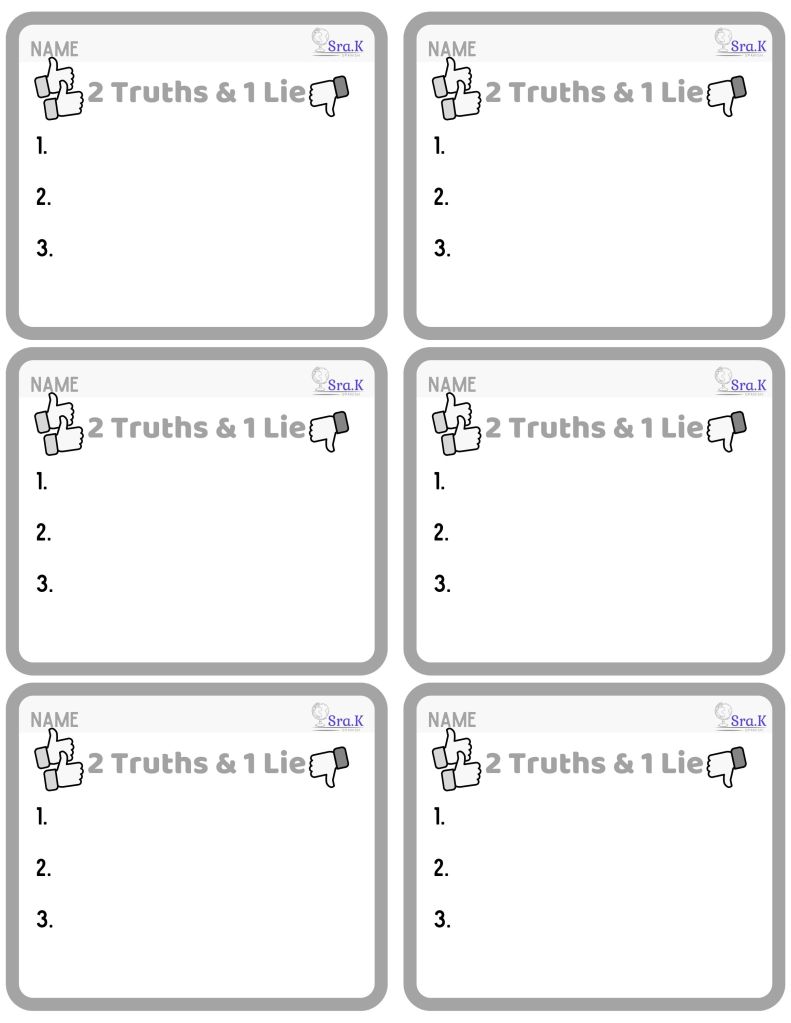
Need some printable Exit Tickets?

Does this October feel like May to anyone else? Hoping it isn’t just me, LOL!

So, Exit Tickets seem to be a quick, easy way for formative assessments. I had been using sticky notes, but…. that’s a LOT of sticky notes!!!

So, here are a few ideas you could print and use TOMORROW! Of course, I have about 8-10 more in my TpT store, but hopefully these 7 are useful AND can give you a template for you to just make up your own any time!

Hope this makes the end of class a little easier. The entire group of Exit Tickets comes free as part of the Sra. K. Spanish Squads. You can go HERE and learn more about the squads and join today!

Happy Teaching!

Alana

Find me on Instagram (@SraKSpanish) , Facebook (sra k Spanish) and Follow my TpT store as I build more resources! !
Teaching Idioms to Increase Comprehension

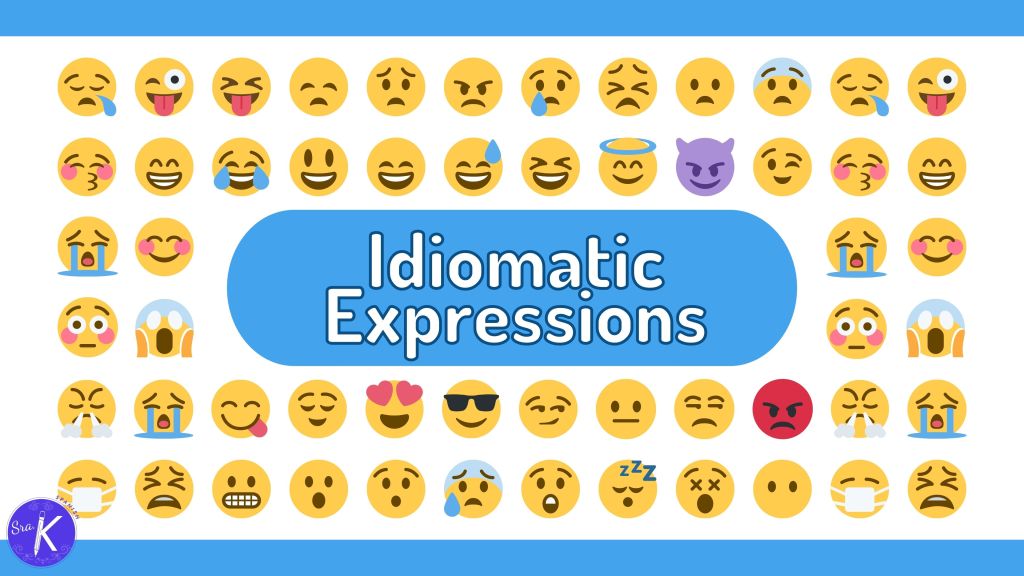
Working with English Language Learners this year has really opened my eyes to just how much we use idiomatic expressions. They are EVERYWHERE! We use them in everyday conversations. We see them referenced in literature. We see them used in movies and tv and commercials. They are everywhere, and our students need to have a strong base in idiomatic expressions in order to be able to fully understand the language.

So, I started “an idiom a day” with my ESOL and bilingual classes. It has been really a great conversation starter! I am hearing lots of “oh, I heard that but I didn’t get it” and “oh, that makes sense now” from my students.

Here is a link to a free version with a few of them. Feel free to use them in your classes, use them to create your own or even adapt them to the language you teach!

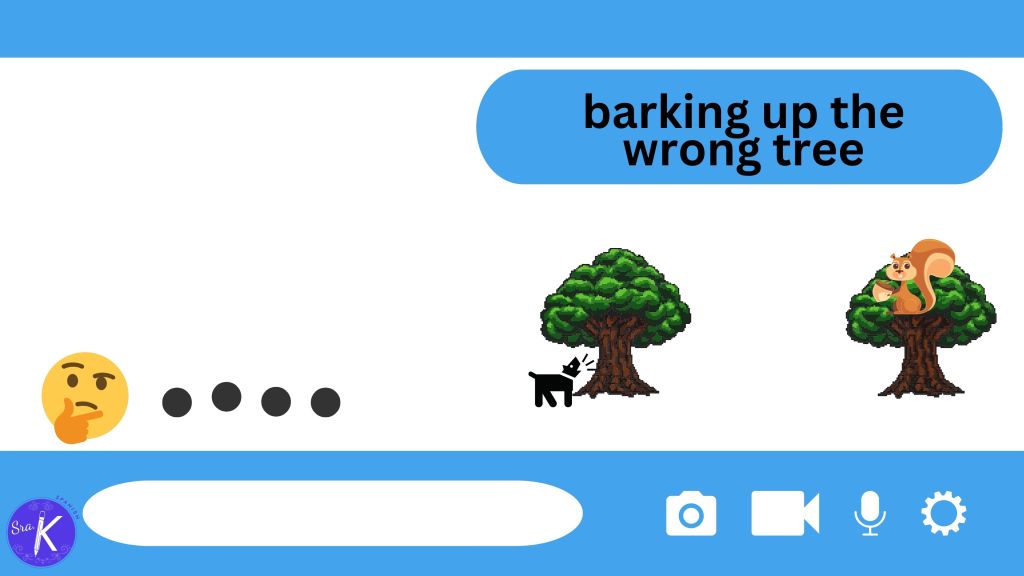
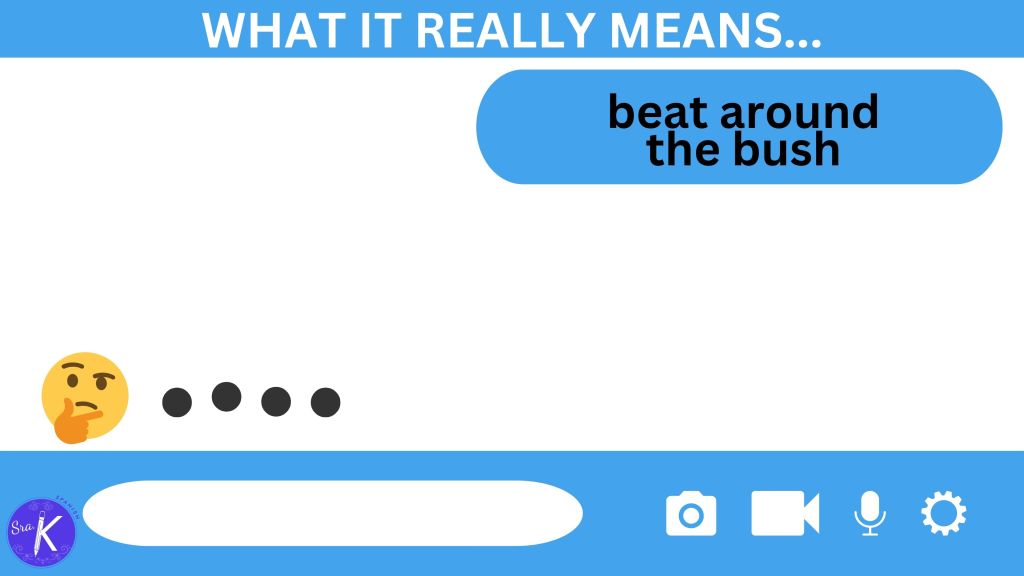
I have used them to start class, given them to students to try to figure out on their own and used them as group work for students to discuss and come up with their best guess at the real meaning of the idiom! You could use all of the slides or even have students draw what the words say and then what it really means after a class discussion. This helps them really internalize the difference in the words alone and the expression as a whole.

You can also find Idiomatic Expressions in English Part 1, Part 2 and 3 (each with 15-20 idioms) on my TpT store!

Hope this makes incorporating idioms a little easier. Idiomatic Expressions 1 comes FREE as part of the Sra. K. Spanish Squads, and Part 2 and 3 will be included in November and December. You can go HERE and learn more about the squads and join today!

Happy Teaching!

Alana

Find me on Instagram (@SraKSpanish) , Facebook (sra k Spanish) and Follow my TpT store as I build more resources! Become a Patron on Patreon!
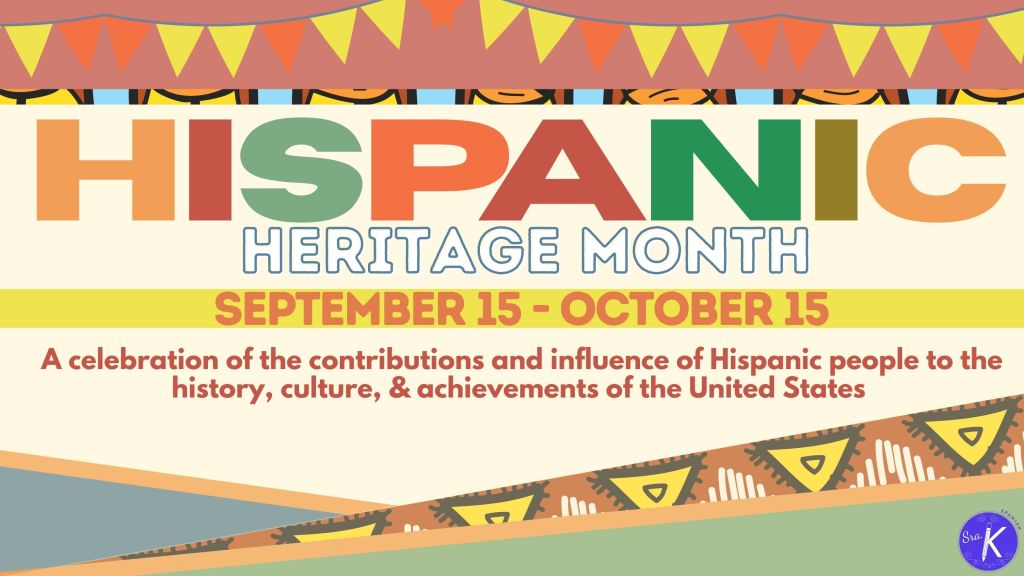
Hispanic Heritage Month

Happy Hispanic Heritage Month!

I created a slideshow last year, but I have made it even better this year with more facts and ideas on how you could use it!

You can get the full version HERE in my TpT store.

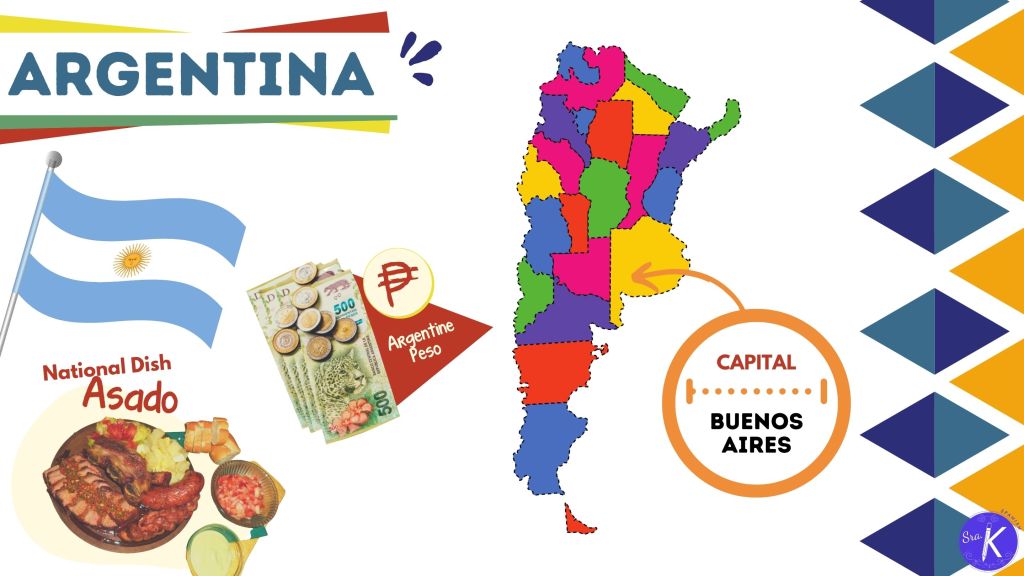
Each country has these two pages! HERE is a version with just a couple of countries if you want to try it out!

Hope this makes incorporating culture a little easier. The entire presentation comes free as part of the Sra. K. Spanish Squads. You can go HERE and learn more about the squads and join today!

Happy Teaching!

Alana

Find me on Instagram (@SraKSpanish) , Facebook (sra k Spanish) and Follow my TpT store as I build more resources! Become a Patron on Patreon!
Keeping them on task! “Training the Troops” Part 2

When “Training the Troops,” I often think about the things that didn’t go so well the year before and then think of a system that might help.

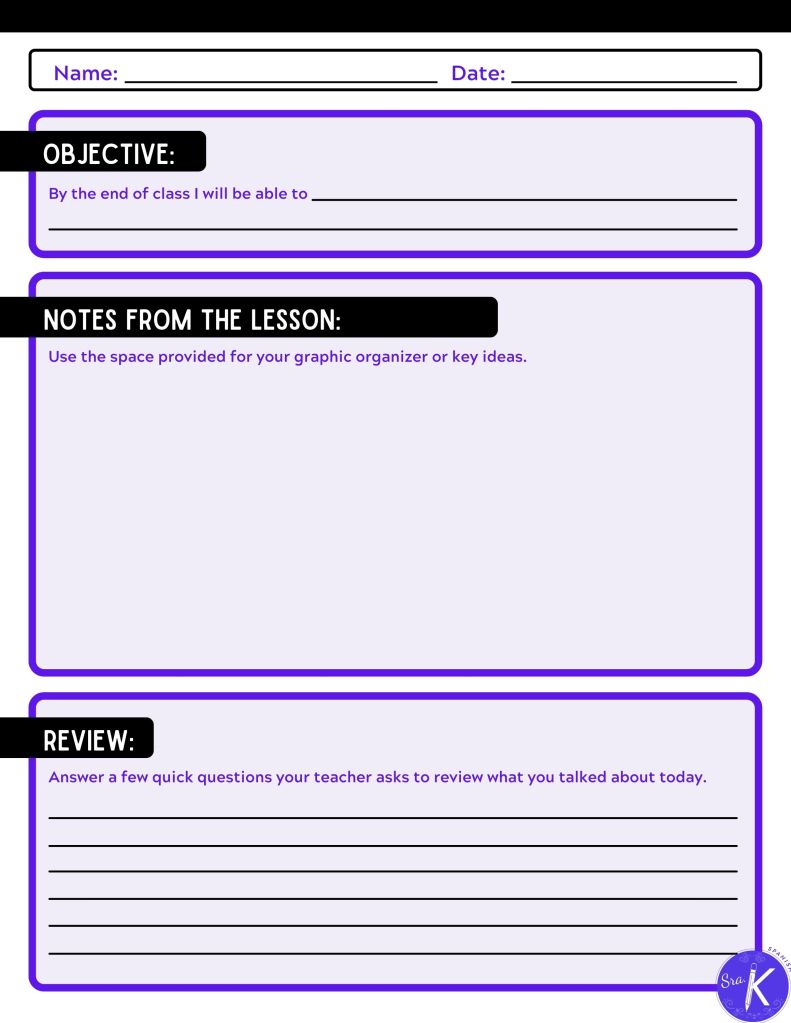
I began to think about my struggles in my own language learning classes. Mostly, it was keeping myself and my students on a routine and then making sure my students were able to be held responsible for their own learning. So, I made this page:

This is a page I print out. I print the correct number of pages for the number of class days that week. Students are responsible for filling out the pages every class period. If they are absent, they find a friend who has the day’s notes or they grab my copy from the front of the room (I do this in a notebook I have for each class period). Then, at the end of the week, I ask for them to turn in one day’s paper. I don’t tell them before that moment and I only give them 30 seconds to get it to my hand. Why? This motivates them to do all the days, since they never know which I will ask for, AND it doesn’t give them time to copy their friend’s paper.

For classes that are more self-motivated, I will just train them with this page the first week or so and then have them do the same thing inside their notebooks. We are a 1:1 campus, so I then have them take a pic of the page I am going to check and submit it via our LMS (we use Schoology).

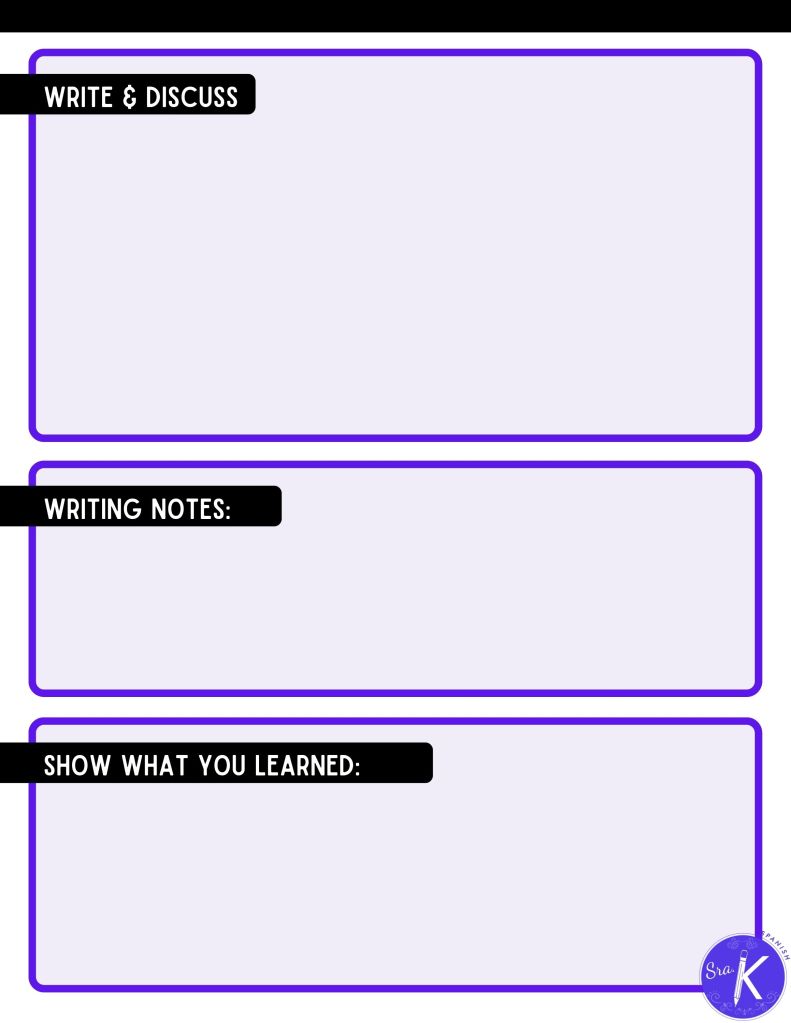
I also came up with some other graphic organizers that are super general, a place to keep anchor charts made in class for reference purposes and several other generalized pages you could easily fit to your teaching style in THIS Daily Learning Log. You can get this one and the others on my TpT store OR you can join my Patreon OR my SQUAD!

You can go HERE and learn more about the squads and join today!

Happy Teaching!

Alana

Find me on Instagram (@SraKSpanish) , Facebook (sra k Spanish) and Follow my TpT store as I build more resources! Become a Patron on Patreon!
First Week Ideas – This or That?

I am planning out some things to do in my classes these first few days back to get students engaged right out of the gate, let them see some things they have in common with their classmates AND help me get to know them!

So, one thing I thought would be fun would be an always popular debate…. Do you prefer THIS or THAT?

I know, seems silly, but kids really get into this one! It is a pretty heated debate. Now… how could you use it?

Well, in any class, you can just use it as a way to get the kids involved. In a World Language classroom, you could use it to review vocabulary or preferences and even write about one of the slides independently, in pairs or in groups. This could work with ELA classes as well for a speaking and writing activity. You could level up or level down as much as you need to make it a fun and even meaningful debate. You could use a Venn diagram or t-chart to take a look at what the students in each class prefer. You could do some basic graphing for math classes! The possibilities are endless!

I have a full version up in HERE my TpT store, but HERE is a quick PDF to get you started! You can certainly use these and then just add your own slides in.

Hope this inspires you to get students talking and writing on day ONE!

For even more resources, group coaching and more, head over HERE and learn more about the squads! Join today!

Happy Teaching!

Alana

Find me on Instagram (@SraKSpanish) , Facebook (sra k Spanish) and Follow my TpT store as I build more resources! Be on the lookout for the announcement for my annual membership site in July 2022!