I am planning out some things to do in my classes these first few days back to get students engaged right out of the gate, let them see some things they have in common with their classmates AND help me get to know them!
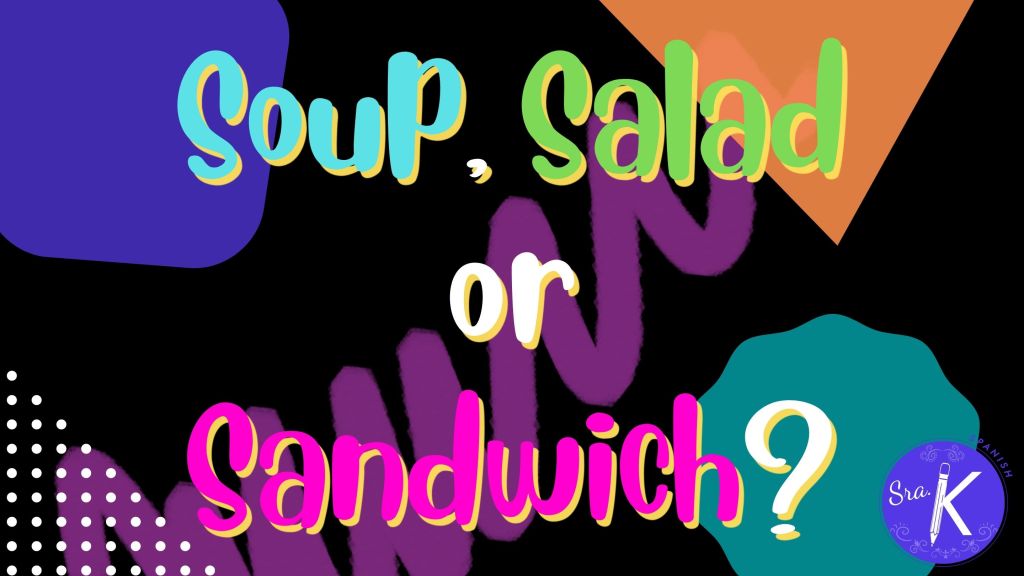
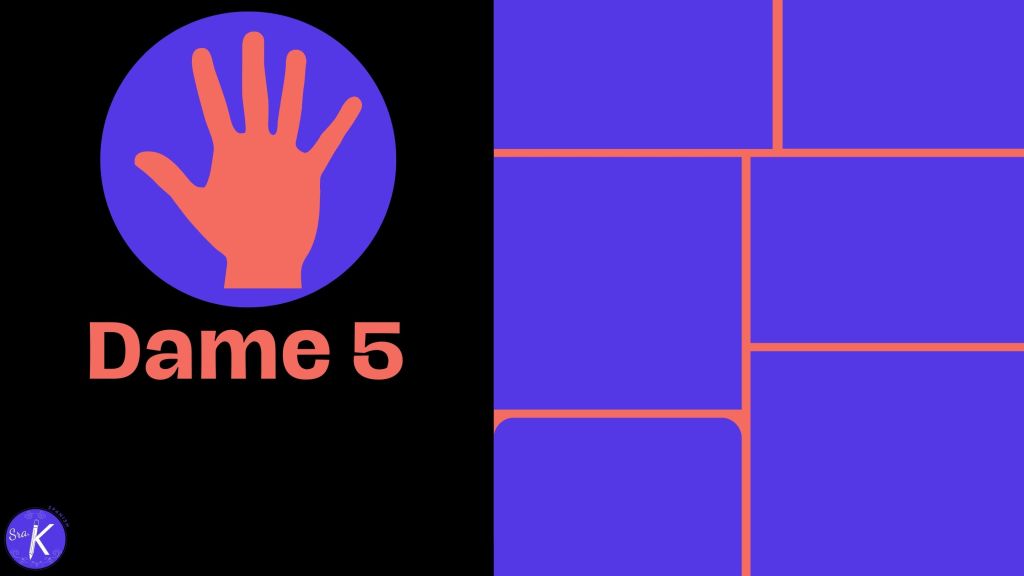
So, one thing I thought would be fun would be an always popular debate…. Is it a salad, a soup or a sandwich?
I know, seems silly, but kids really get into this one! It is a pretty heated debate. Now… how could you use it?
Well, in any class, you can just use it as a way to get the kids involved. In a World Language classroom, you could use it to review foods and even write about one of the foods independently, in pairs or in groups. This could work with ELA classes as well for a speaking and writing activity. You could level up or level down as much as you need to make it a fun and even meaningful debate. You could use a venn diagram or t-chart to settle the debate as well or have students write down their classification on a graphic organizer. The possibilities are endless!
I have a full version up in HERE my TpT store, but HERE is a quick PDF to get you started! You can certainly use these and then just add your own slides in.
Hope this inspires you to get students talking and writing on day ONE!
I have decided to head back into the bilingual elementary classroom next year. I feel like, and a lot of you probably do too, this pandemic teaching has just sucked all the fun out of teaching. I started just going through the motions and not really feeling the same passion for my classes, and that isn’t fair to myself or my students.
So, I will be in a bilingual classroom this coming school year, but still creating and sharing things for world language classrooms and in English and Spanish. I have LOTS of fun things I would love to share from my almost 10 years in middle and high school. My 16 years in bilingual classrooms before that are just calling for me to come back.
In that spirit, a lot has changed in the time I have been out of elementary. LOTS! One thing is technology and my ability to use it to make some useful tools. I figured it best to start at the beginning like I do every year with my annual week of “Training the Troops.” It is that tried and true “If you fail to plan, then plan to fail.”
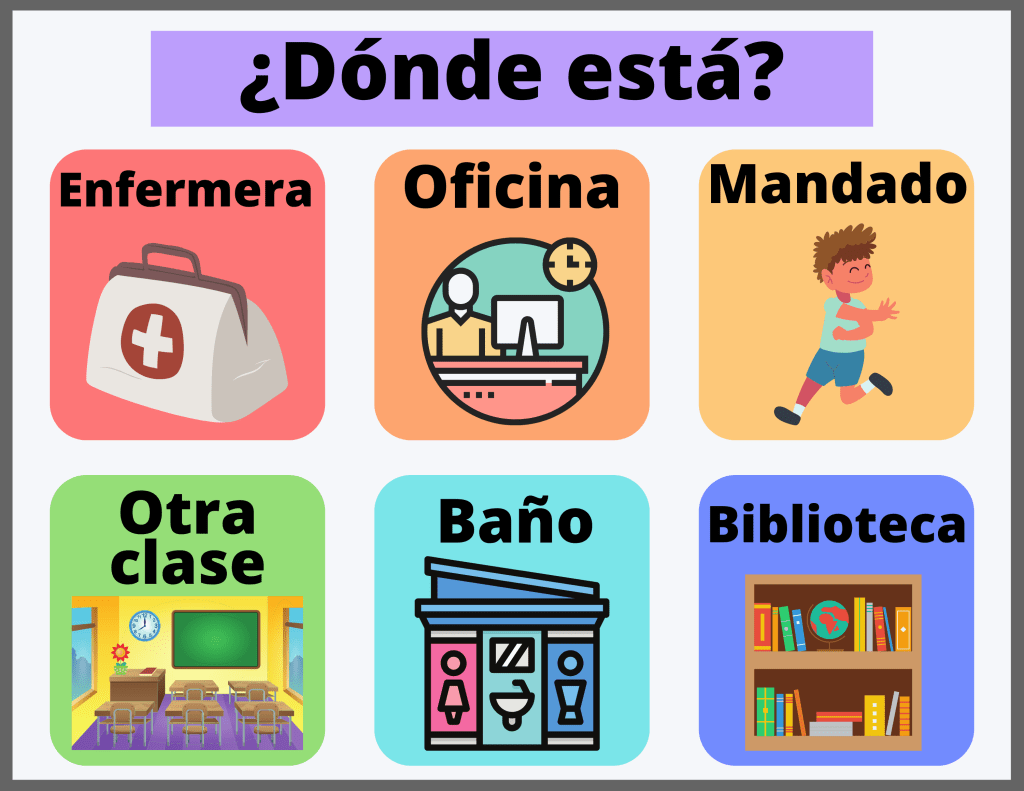
So, here is a simple one! In these times when we are super vigilant of student safety, I really wanted to have a set system to know where all kids are at all times. An easy way to do this is to assign kids a number. This way, if you switch classes during the day, you don’t have to switch names out. For this, I will have a small magnetic whiteboard by or on my door (depending on what they allow). On one half of the board will be some round, Dollar Store magnets with numbers on them. For me, I only need 1-25 this year (elementary has its advantages). On the other half of the whiteboard, I will have these signs:
This one in Spanish in case you need/want to use it:
So, students will just put their numbered magnet on the board before they leave the room. This way, I will always know where students are in the school. Not that I don’t keep up with them, but if we are working in small groups or I send a kid for something, I don’t want to have to wonder where they are should a situation arise.
I will be making and sharing some more training tips over the next few weeks as I get back into the swing of the new year, so come back and check them out. I will share some things I did in secondary (middle/high school) and some things I plan to do with the littles.
Happy Teaching!
Alana
You can go HERE and learn more about the SraKSpanish squads! Join today!
Every year, I have done a Menu Project after our unit about food. I generally have students create a menu with a group and then make the classroom into a cafe and allow them to take turns being the waitstaff and the customers. The kids usually enjoy this project, but I had to do it differently during pandemic teaching, and that really changed my mind about the project.
During the start of the pandemic and even into the following year, I had to pivot to making this an online project. I decided the first year to let students just create one. It didn’t go well. There was LOTS of copying and pasting going on. The next year, I decided to throw some culture into it since some were still at home in their copy and paste/Google Translate mode. Instead of focusing on language, I made the project really based on culture and even allowed them to do it in English (it was Spanish class).
This year, I came to a happy medium. I made it a mixed project and used several opportunities to differentiate the project.
First, I had students choose a country, region or city they were interested in. For my Spanish classes, this had to be one in Latin America. For my ESOL classes, I allowed them to choose any country, including their home country, they were interested in or wanted to share.
Next, students had to find at least two dishes that were common, or popular or traditional to that region, country or city for each meal of the day. They had to find pictures of the dish and save them to their computer or drive. Then they were told to keep a Google Doc with all the information about the dish (ingredients, how it is served, when is the dish generally prepared, etc…)
After that, it was time to decide on how to present this. This past year, I gave them the option of doing it digitally (they had to present a written rough draft first) or creating a menu on a piece of posterboard (remembering they had to draw for this one).
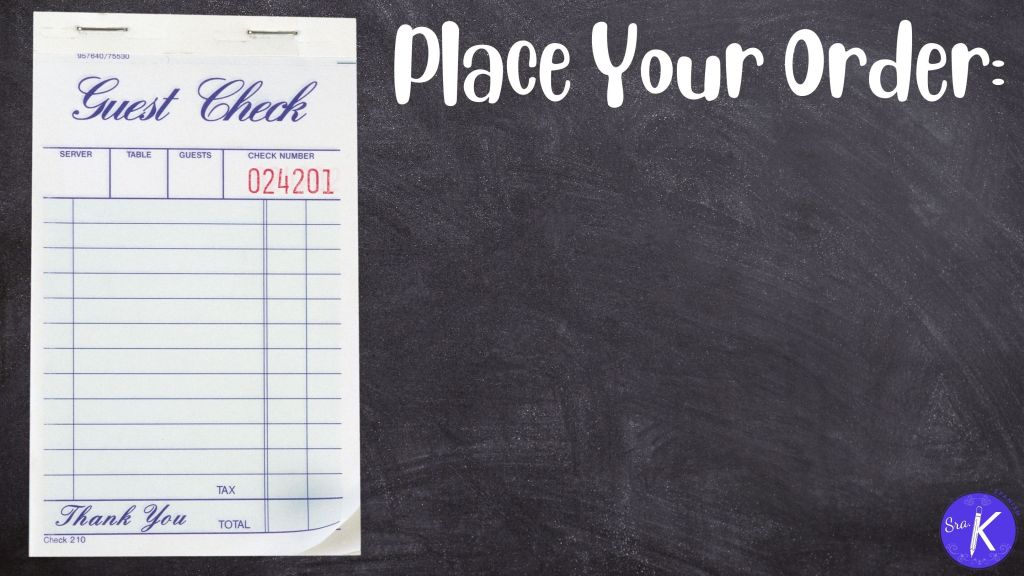
Now, they had to write out their “order” for a waiter.
Finally, they were to present their favorites and their “order” with the class in person or in a video to be shown to the class.
I really did enjoy the mix of culture and language that I saw being practiced this year was AMAZING, and I will definitely do this project this way again! I hope these ideas help you get your students to review vocabulary and practice speaking while learning about cultures around the world. I have the full project slideshow on my TpT store HERE, but you can totally just take the idea and run with it. The key is to sail on into the summer with low stress and high engagement!
Happy Teaching!
Alana
You can go HERE and learn more about the SraKSpanish squads! Join today!
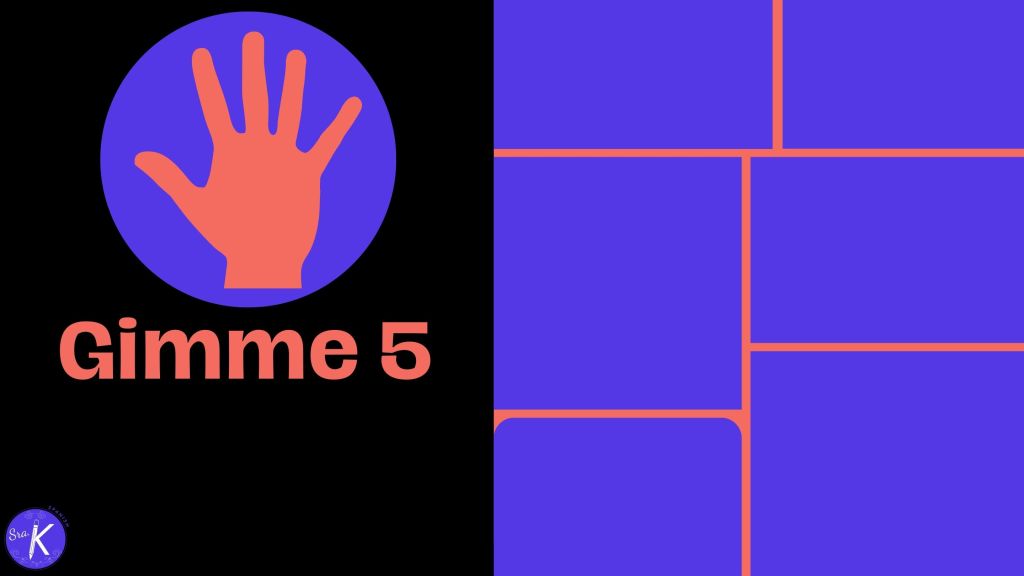
This is a go-to mini-project I use all year long when I need a day or two or the kids need a break between topics/units.
First, decide what you want the students to share. It can be an interesting person, place, celebration, festival or custom in any country that speaks the language you are teaching. You can also use this to review parts of a unit you just did. This can be done individually, in partners or small groups.
Next, let students decide what they want their “Gimme 5” presentation to be about. Remind them that they will need to have 5 facts about each of their top 5 things to know about the topic. You might want to incorporate a graphic organizer before giving them the Google Presentation Template to fill in. My students need scaffolding, so I always give them a “Planning Page” first. You can just have them make a bulleted list to give you or you can make a page they have to fill in.
After you approve their topic and top 5 things they are going to research and/or talk about, you can give them THIS presentation to fill in. Of course, if you want to make this last a few more days, you can let them customize this.
Next, it is time for presentations! Since having to go virtual a couple years ago, I have really started to like using Screencastify or Loom or even just the recorder on their computer to have students record the presentation ahead of time. I have found this gives them a chance to re-record if needed and practice. This really does cut the anxiety a lot of students have associated with live presentations in front of their peers. You can certainly go the old-fashioned route and have them just quickly present in front of the class. The presentation part allows me to get a speaking grade if I have them do the presentation in the language of the class. Of course, that is not really possible for lower level students, so use this as a differentiation for Heritage Learners or advanced students.
Hope this inspires you to get them talking and working together! I will have this and other review materials up for sale on my TpT store, but I really appreciate you taking the time to visit the blog, so I wanted you to have this template to use now. I also would LOVE and APPRECIATE TONS if you wouldn’t mind following this blog, my TpT store and my new Instagram (@sra.k.spanish) I started to showcase the fun things I am creating.
The key is to sail on into the summer with low stress and high engagement!
These last couple of weeks or days can be brutal! Need something to help pass the time? I got you!! One thing my students have loved ALL YEAR is a Movie Talk day!
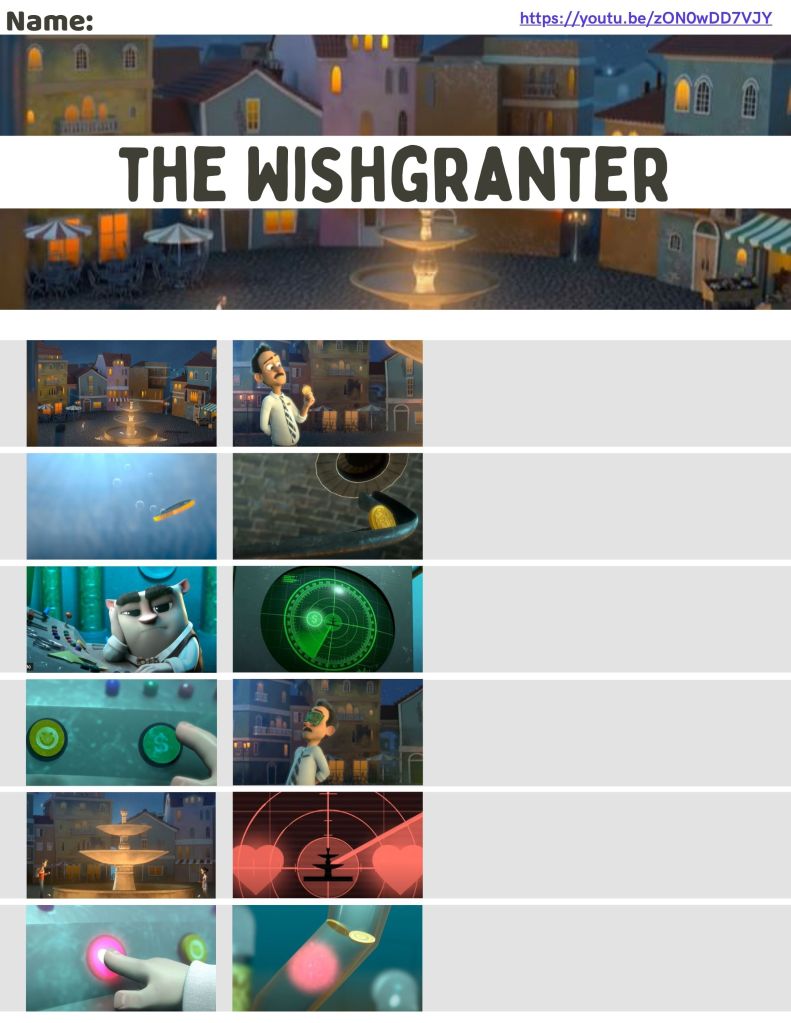
Now, if you are not familiar with Movie Talk, there are LOTS of great posts out there about this strategy. I have done it several ways. One thing I really like to do is use just a few of the pictures to tease the film first. I create a slideshow, like THIS one and then just choose a few of the slides to talk about. We describe the people and the setting. We talk about what is happening in the picture. We make predictions and inferences based on the information. At higher levels, we may write out our predictions and/or fill out a story mountain based on the prediction.
Then, we watch the movie short. The one used for this example is HERE. It is a pretty simple one, but has a lot you can talk about. I actually used this one near Valentine’s Day, but it is appropriate for any time of year. I differ from many others, in that I do not pause every few seconds to talk about it. We already did that when I teased it with the slideshow (we also put target vocab and grammar structures I may be required to teach on the board or an anchor chart during this discussion). Next, I play it all the way through. Then, I play it a second time and pause at important points to talk about them and draw the students’ attention to key words, phrases and/or grammar concepts. Finally, I play it through one last time, talking at normal speed about the things happening.
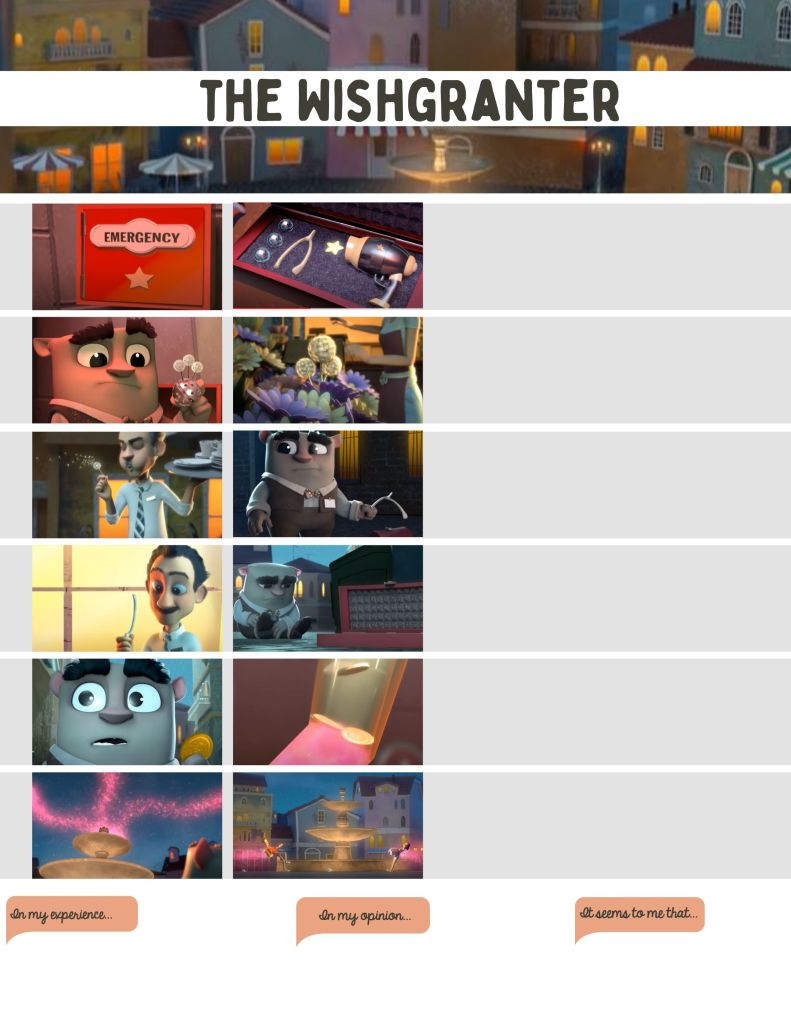
To see what they know, I have students use the pages below to fill in their own explanations of what the movie was about.
This is a GREAT place to differentiate. For example, beginners would perhaps just look at these pictures and write words or phrases they remember from you talking about the movie as it played or from what you added to the class anchor chart. Higher levels might write sentences describing the pictures or what that part of the story was about. They could also talk about what the characters might have been thinking or feeling or saying in certain parts of the story.
I hope this gives you a day to give students lots of input with minimal effort! I will be selling more of the packs on my TpT store with the preview slideshow, student pages, summary of the short and some ideas for differentiation.
Hope this inspires you to get them talking and working and learning, even in these last few days/weeks of school. The key is to sail on into the summer with low stress and high engagement!
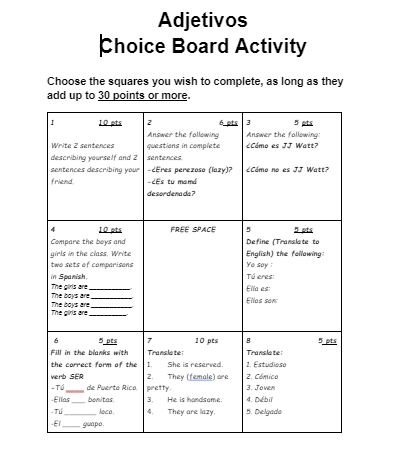
I created this super quick Choice Board to review adjectives in my beginning Spanish class. Feel free to copy this and use it. The editable copy can be found on my TpT store. I have been putting up some other review items this week, so if you need some, check them out and keep checking back, because I am adding new things every day!
As I posted this week, I am creating lots of materials to help my students review for the required vocabulary and grammar in the school where I teach. I do not teach these out of context throughout the year, but we do have common semester assessments, so I want them to feel prepared. I believe strongly in the use of comprehensible input for true language acquisition, so this is quite a deviation from the way I generally teach.
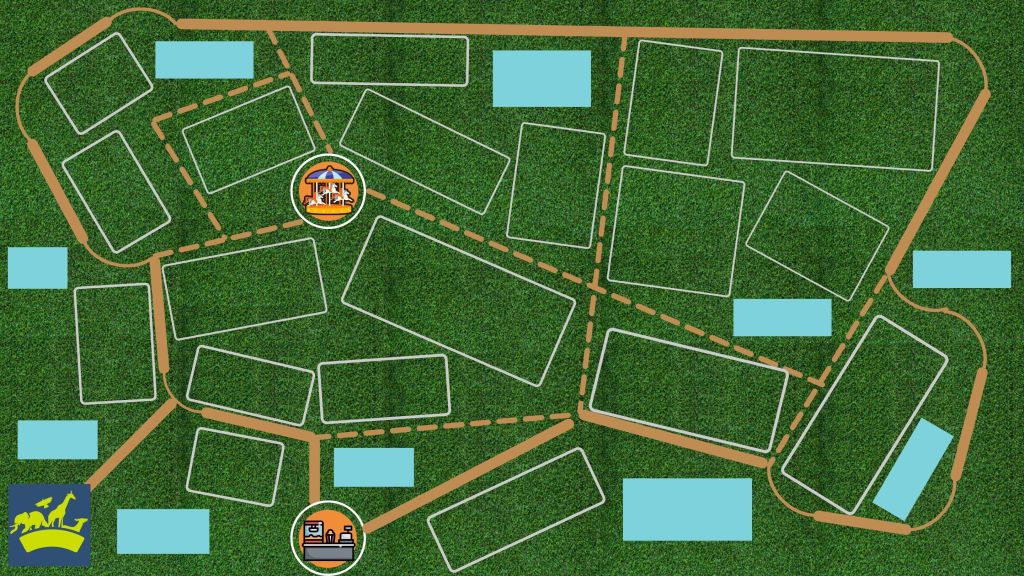
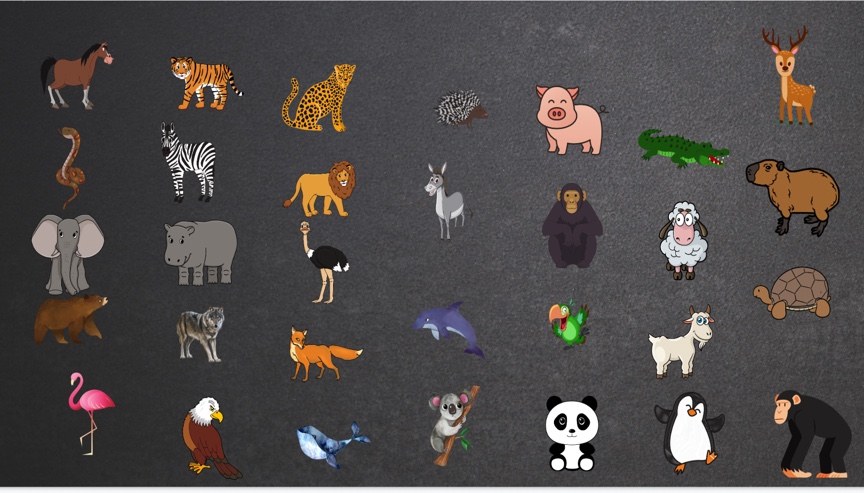
That being said, I wanted to review but keep it fun, interactive and comprehensible. So, I came up with a method I explained in an earlier post HERE. I have taken all the required vocabulary and started to create some interactive activities we can do together or in small groups. Here is one I created to review zoo animals and prepositions of place. I was able to watch students use vocabulary, listen to instructions and demonstrate an understanding of animals and prepositions of place.
This can also be used with younger students to teach the vocabulary and have them practicing the vocabulary in an interactive way. You could certainly print the zoo page and the animals stickers and have students do this in class without the use of computers as well.
Here is the place to move and label the animals.
Here are some of the stickers I used.
Hope this inspires you to get them talking and working together! I will have this and other sets of common vocabulary units up for sale on my TpT store, but you could certainly just use notecards with simple drawings or pics you print. The key is to sail on into the summer with low stress and high engagement!
I am starting to prep for reviewing my students for the required curriculum in my district. One of the things they require is for students to know the location (and I taught capitals) of all the Spanish-speaking countries. So…
Here are a few for you to have!
Yes, I realize that México is not part of “Central America,” but this is the way I had to teach it for curriculum in my district. Below, you will find another.
Since Central America is not a continent, you could also use the one below if you prefer.
Hope they help make an easy addition to your final reviews if this is part of your content! I also added this to Schoology as a “Drag and Drop” assessment and it was a hit!
I have my students glue these into their interactive notebooks, and we work on them throughout the year. They color in the country and label it as we learn about that country. I generally do Central America in the fall and South America and the others in the spring. This, again, is because it is expected in our district.
Hope having these helps you not to have to create another map.
Happy Teaching!
Alana
You can go HERE and learn more about the SraKSpanish squads! Join today!
May… that super fun time of year when state testing, end of year behavior and teacher burnout start to really create a perfect storm.
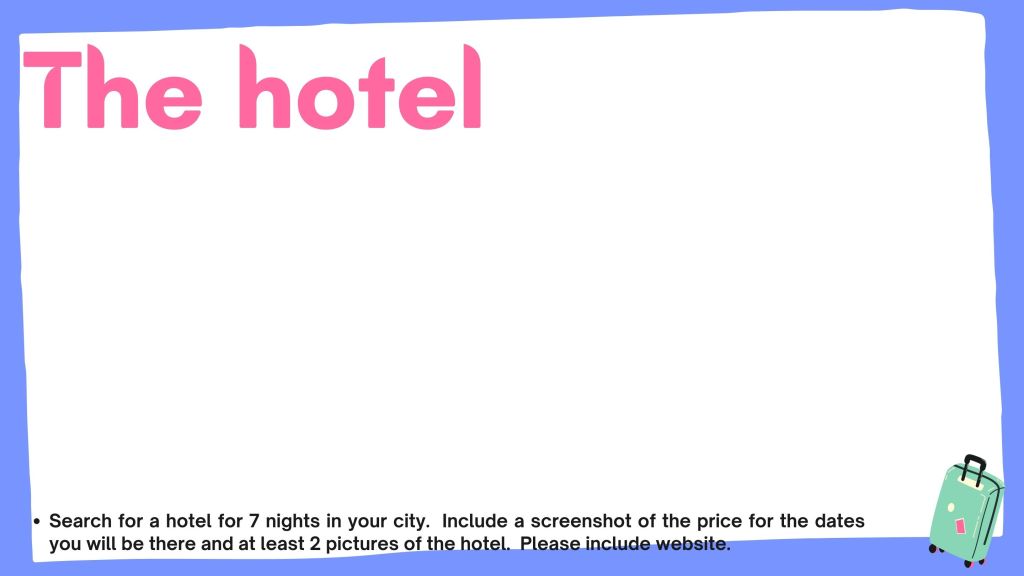
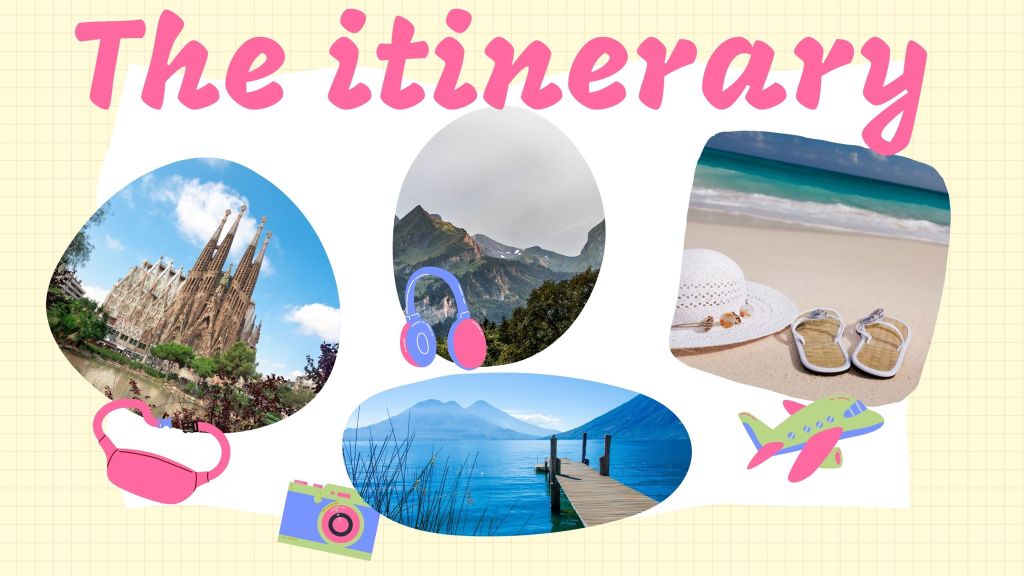
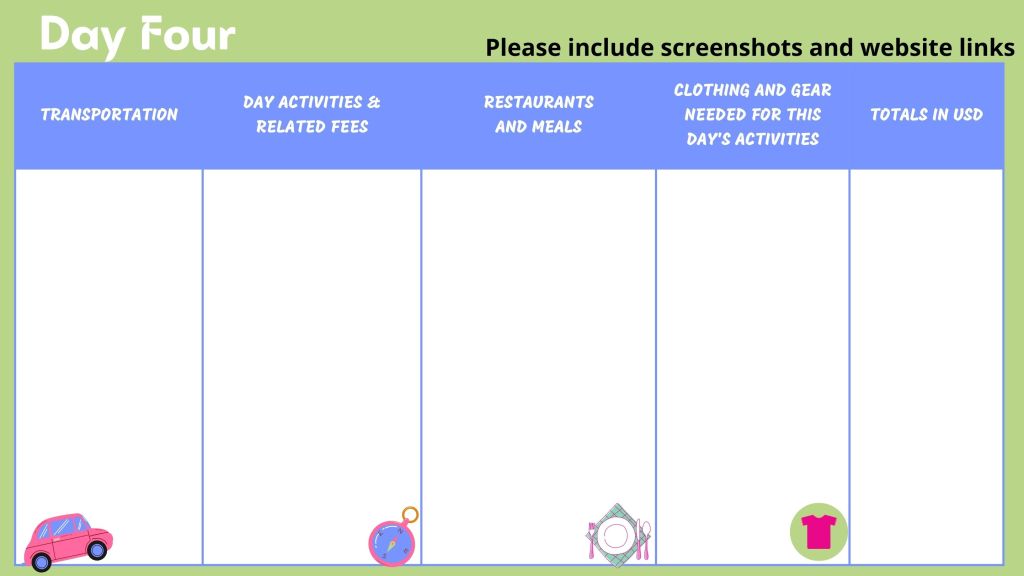
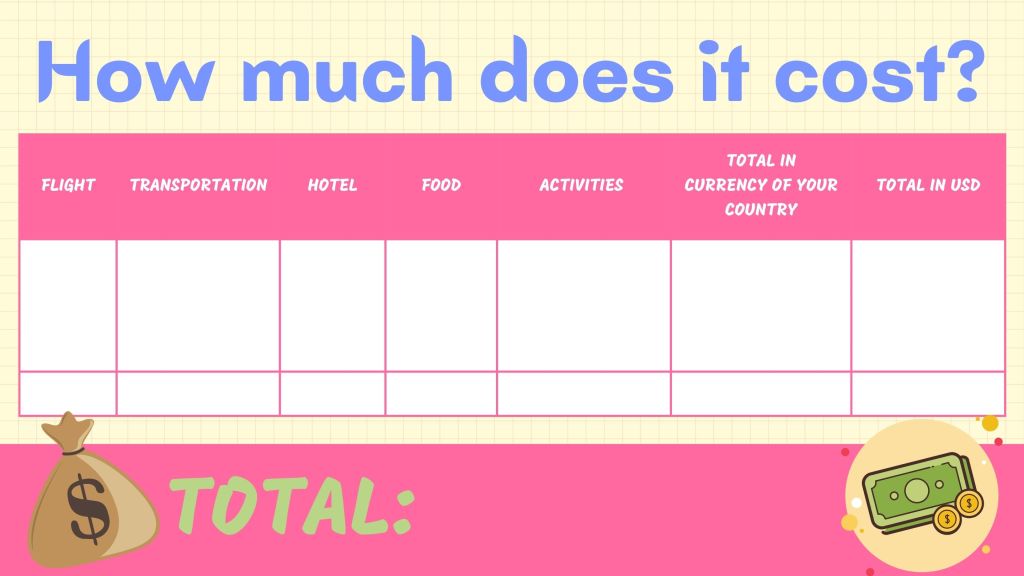
So, for me, it is project time! I have several end of year projects I use from time to time. This year, I recycled a travel project that has really been getting my students talking. They are realizing there is a HUGE world out there, waiting for them to explore it AND they are learning all that goes into planning a trip.
You could have people work in pairs or groups, but at this time of year, I prefer to let them work alone. I did allow my students to research in English. My upper levels and Heritage Speaker classes presented in Spanish, but I allowed my lower level students to choose. I loved hearing their banter about the things they were discovering about travel and faraway places.
You can certainly use just a Google slideshow to have them do the project, or you could even take screenshots of the pics here and use them. The full project with all 14 slides can be found HERE for sale on my TpT store in English or in Spanish if you just want it already done :-).
It was fun, engaging and they learned and problem-solved a LOT! Win-win.
I hope this helps with some ideas for teaching about travel while keeping students focused!
It is that time of year! The students are restless and so are we! Time to get students working collaboratively so you can just observe!
This quarter, in my district, we have to teach vocabulary about travel and clothing. I have been doing lots of different things with this topic, and having fun! I will write about a few of the activities in the next few posts. This one is quick and easy after you have introduced some basic vocabulary to your students. This is kind of a twist on something a colleague of mine (MP) is doing in her class.
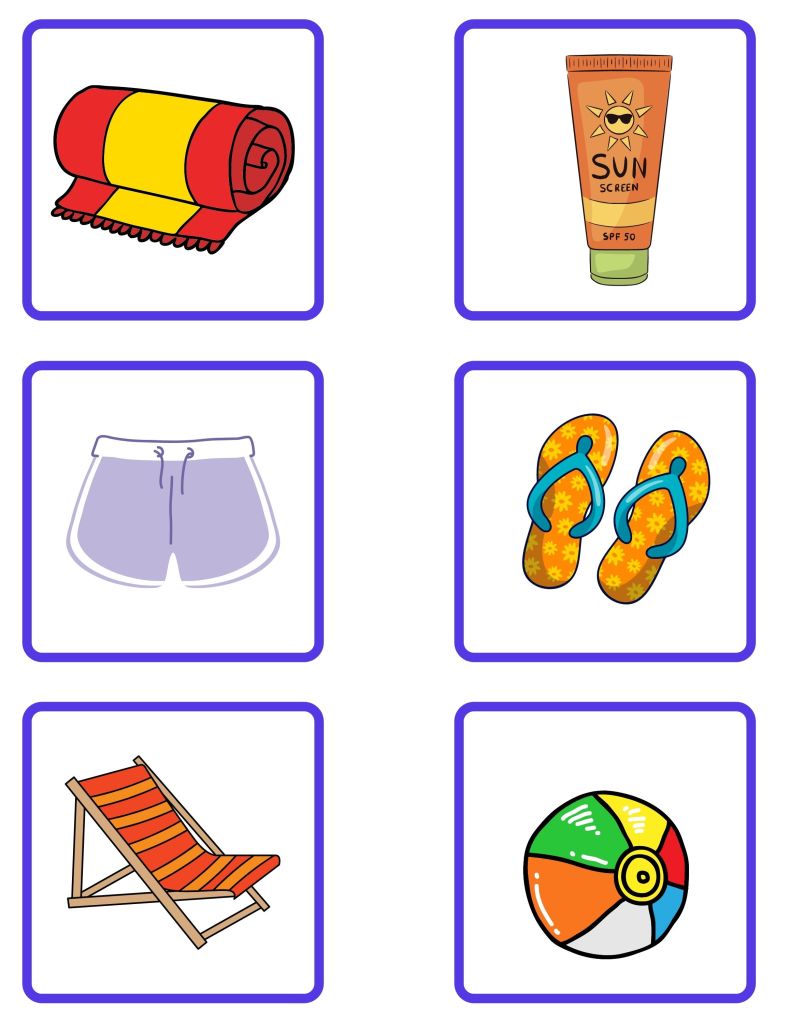
First, you use the vocabulary to make 5-6 cards with pictures. Each set of cards should be related to a visit to a certain place. For example, this one is related to a beach trip.
Then, you cut each “set” and put them in baggies. Then, each group of 3-4 students chooses a bag. They have to take the cards in the bag and use them to write about a trip they took together. Since I teach level 2, I had my students use the past tense and talk about a trip they took last year. I did pre-teach a couple of sentence stems they could use for some of their story. This is easy to level up and down according to the level of your students, but it is a great way to get them to be a little creative.
In order to prevent one person from doing all the work, my colleague had the students each write the paragraph and then only collected one from the group randomly to grade. This way, all the students had to work together to make sure they were all working. I think this is a great idea and is kind of like my daily notes sheets for students who have trouble concentrating.
Hope this inspires you to get them talking and working together! I will have a set of these Travel Story Cards up for sale on my TpT store, but you could certainly just use notecards with simple drawings or pics you print. The key is to sail on into the summer with low stress and high engagement!













 Sra. K. Spanish